🎉 Up to 70% Off Selected ItemsShop Sale




Spiral Clocks by Shiro Kuramata
Description:
“My strongest desire is to be free of gravity, free of bondage. I want to float.”
- Shiro Kuramata
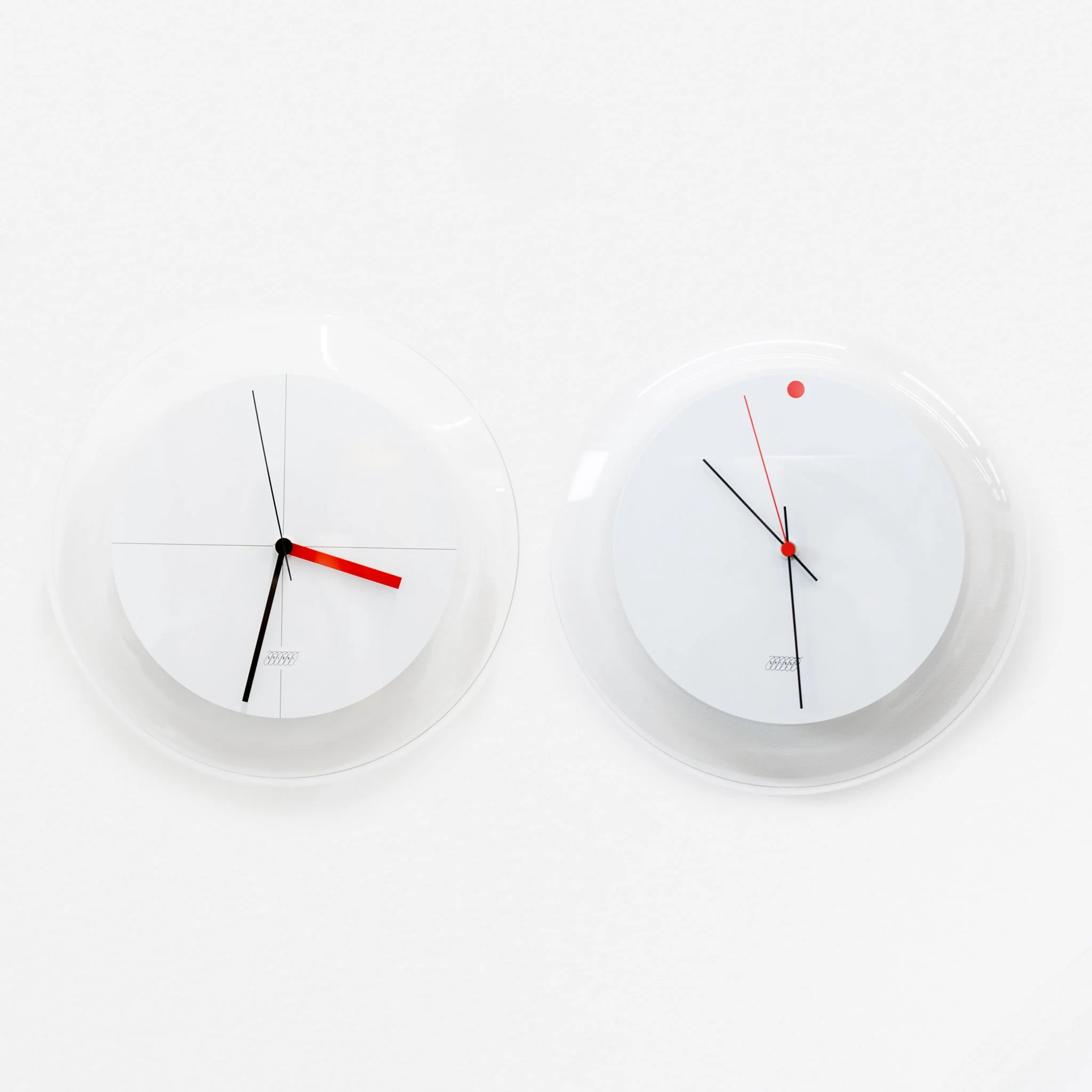
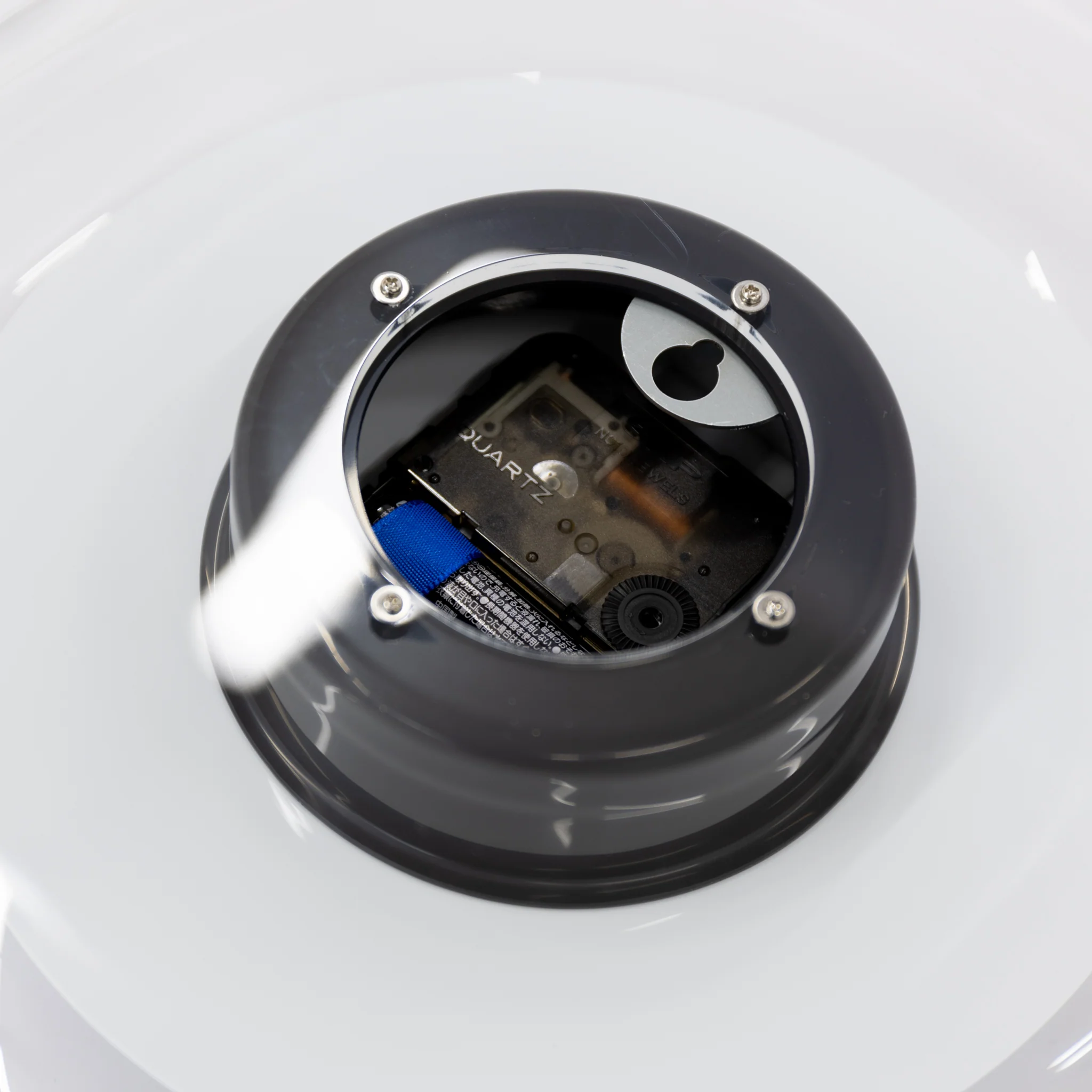
The Spiral Clock—titled “Fūsen” (“Balloon”) in Japanese– conjures up this sense of suspended time, where the viewer is given a glimpse of passing seconds and the vanishing space between objects. The clock’s face is encased in an acrylic “balloon”, allowing onlookers to observe time floating by.
Originally designed in 1981 for the Axis Building in Roppongi.
The SPIRAL logo was designed by Japanese graphic designer Ikko Tanaka.
Measurements:
Diameter: 11.25”
Depth: 3.25”
Variation:
The Spiral Clock comes in two variations: “Line” and “Dot”.
“Line” features thin perpendicular lines intersecting in the middle, as well as a red hour-hand and a black minute-hand.
“Dot” features a minimalist blank face with one red dot at the noon position. The hour-hand and minute-hand are both black, and the second-hand is red.
History:
Born in 1934, Kuramata was a pioneering figure in post-war Japanese design, transforming the global perception of Japanese aesthetics. Inspired by his studies in architecture and cabinet making, his works blended traditional Japanese craftsmanship with industrial materials like Plexiglass, aluminum, and steel mesh. Kuramata’s exploration of Eastern and Western influences defined his unique sensibility, and can be seen in iconic creations such as his How High the Moon armchair and Miss Blanche chair.
“My strongest desire is to be free of gravity, free of bondage. I want to float.”
- Shiro Kuramata
The Spiral Clock—titled “Fūsen” (“Balloon”) in Japanese– conjures up this sense of suspended time, where the viewer is given a glimpse of passing seconds and the vanishing space between objects. The clock’s face is encased in an acrylic “balloon”, allowing onlookers to observe time floating by.
Originally designed in 1981 for the Axis Building in Roppongi.
The SPIRAL logo was designed by Japanese graphic designer Ikko Tanaka.
Measurements:
Diameter: 11.25”
Depth: 3.25”
Variation:
The Spiral Clock comes in two variations: “Line” and “Dot”.
“Line” features thin perpendicular lines intersecting in the middle, as well as a red hour-hand and a black minute-hand.
“Dot” features a minimalist blank face with one red dot at the noon position. The hour-hand and minute-hand are both black, and the second-hand is red.
History:
Born in 1934, Kuramata was a pioneering figure in post-war Japanese design, transforming the global perception of Japanese aesthetics. Inspired by his studies in architecture and cabinet making, his works blended traditional Japanese craftsmanship with industrial materials like Plexiglass, aluminum, and steel mesh. Kuramata’s exploration of Eastern and Western influences defined his unique sensibility, and can be seen in iconic creations such as his How High the Moon armchair and Miss Blanche chair.
Materials:
Blow-molded acrylic, Enameled metal
Care Instructions:
Do not wash with any chemical agents. Dust and wipe with a dry cloth as needed.
Blow-molded acrylic, Enameled metal
Care Instructions:
Do not wash with any chemical agents. Dust and wipe with a dry cloth as needed.
Final Sale
Select Style
From $269.50
Original: $770.00
-65%Spiral Clocks by Shiro Kuramata—
$770.00
$269.50Product Information
Product Information
Shipping & Returns
Shipping & Returns
Description
Description:
“My strongest desire is to be free of gravity, free of bondage. I want to float.”
- Shiro Kuramata
The Spiral Clock—titled “Fūsen” (“Balloon”) in Japanese– conjures up this sense of suspended time, where the viewer is given a glimpse of passing seconds and the vanishing space between objects. The clock’s face is encased in an acrylic “balloon”, allowing onlookers to observe time floating by.
Originally designed in 1981 for the Axis Building in Roppongi.
The SPIRAL logo was designed by Japanese graphic designer Ikko Tanaka.
Measurements:
Diameter: 11.25”
Depth: 3.25”
Variation:
The Spiral Clock comes in two variations: “Line” and “Dot”.
“Line” features thin perpendicular lines intersecting in the middle, as well as a red hour-hand and a black minute-hand.
“Dot” features a minimalist blank face with one red dot at the noon position. The hour-hand and minute-hand are both black, and the second-hand is red.
History:
Born in 1934, Kuramata was a pioneering figure in post-war Japanese design, transforming the global perception of Japanese aesthetics. Inspired by his studies in architecture and cabinet making, his works blended traditional Japanese craftsmanship with industrial materials like Plexiglass, aluminum, and steel mesh. Kuramata’s exploration of Eastern and Western influences defined his unique sensibility, and can be seen in iconic creations such as his How High the Moon armchair and Miss Blanche chair.
“My strongest desire is to be free of gravity, free of bondage. I want to float.”
- Shiro Kuramata
The Spiral Clock—titled “Fūsen” (“Balloon”) in Japanese– conjures up this sense of suspended time, where the viewer is given a glimpse of passing seconds and the vanishing space between objects. The clock’s face is encased in an acrylic “balloon”, allowing onlookers to observe time floating by.
Originally designed in 1981 for the Axis Building in Roppongi.
The SPIRAL logo was designed by Japanese graphic designer Ikko Tanaka.
Measurements:
Diameter: 11.25”
Depth: 3.25”
Variation:
The Spiral Clock comes in two variations: “Line” and “Dot”.
“Line” features thin perpendicular lines intersecting in the middle, as well as a red hour-hand and a black minute-hand.
“Dot” features a minimalist blank face with one red dot at the noon position. The hour-hand and minute-hand are both black, and the second-hand is red.
History:
Born in 1934, Kuramata was a pioneering figure in post-war Japanese design, transforming the global perception of Japanese aesthetics. Inspired by his studies in architecture and cabinet making, his works blended traditional Japanese craftsmanship with industrial materials like Plexiglass, aluminum, and steel mesh. Kuramata’s exploration of Eastern and Western influences defined his unique sensibility, and can be seen in iconic creations such as his How High the Moon armchair and Miss Blanche chair.
Materials:
Blow-molded acrylic, Enameled metal
Care Instructions:
Do not wash with any chemical agents. Dust and wipe with a dry cloth as needed.
Blow-molded acrylic, Enameled metal
Care Instructions:
Do not wash with any chemical agents. Dust and wipe with a dry cloth as needed.
Final Sale